
Rubber Flooring Over Concrete: How Dairy Barn Retrofits Pay Off

Retrofitting rubber flooring over existing concrete can help dairy producers improve traction, support cow comfort and mobility, and reduce direct wear on aging barn floors. With proper preparation and products such as KRAIBURG rubber mats and DairyGrip Rubber Floor Belting, producers can upgrade problem areas in phases without necessarily replacing entire sections of concrete.
A dairy barn's concrete floors take a beating. Years of cow traffic, manure scraping, moisture, and equipment use can gradually wear away surface texture, making once-reliable walking areas harder for cows to navigate.
Over time, concrete grooves wear down, traffic lanes become polished, and corners begin to chip. Wet areas can become especially slippery, affecting how confidently cows move through the barn.
Replacing large sections of concrete can be expensive and disruptive, but it isn't always necessary.
Installing rubber flooring over concrete offers a practical alternative for many dairy operations. By addressing problem areas with the right flooring system, producers can improve traction and cow comfort while preserving concrete that remains structurally sound.
At Agromatic Inc., we offer KRAIBURG rubber flooring and cattle mats and DairyGrip Rubber Floor Belting for a variety of applications, including dairy barn retrofits.
The key to a successful investment is knowing where to start, how to prepare the existing floor, and which rubber flooring products fit your operation.
Why Retrofit Rubber Flooring Instead of Replacing Concrete?
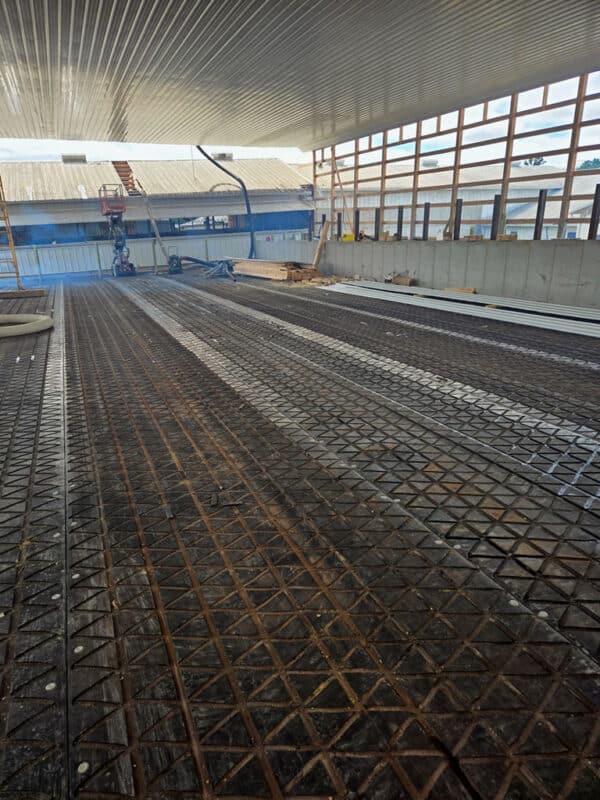
When grooves become worn or surfaces become smooth, cows may hesitate, shorten their stride, or have difficulty maintaining traction in high-traffic areas.
Rubber flooring can help address these challenges by providing cushioning and a more consistent walking surface.
For producers considering a dairy barn flooring retrofit, the benefits may include:
- Improved traction: Textured rubber surfaces can help cows maintain footing on frequently traveled paths.
- Greater walking comfort: Rubber provides cushioning compared with hard concrete, particularly in areas where cows stand or walk for extended periods.
- Better cow flow: More secure footing can help reduce hesitation when cows move through turns, crossovers, and parlor entrances.
- Reduced direct surface wear: Rubber can act as a protective layer over sound concrete, reducing some of the direct abrasion associated with daily traffic.
- Flexible project planning: Producers can upgrade individual barn areas rather than undertaking a complete flooring replacement.
Retrofitting can also help producers spread project expenses across multiple phases.
However, the long-term value of a retrofit depends on choosing the appropriate product and making sure the existing floor is ready for installation.
Start With the Concrete You Have
Before installing rubber flooring, inspect the concrete underneath.
Rubber can improve footing on worn concrete, but it isn't a structural repair material.
If a slab is severely cracked, heaving, settling, or breaking apart, those issues should be evaluated and corrected before flooring is installed.
Water management matters just as much.
A rubber overlay cannot automatically correct poor drainage, and moisture problems beneath or around the flooring may create additional maintenance challenges.
Before moving forward with a retrofit, evaluate:
- Structural condition: Identify cracks, crumbling areas, settlement, and unstable concrete.
- Surface preparation: Remove loose material, heavy deposits, and raised areas that could interfere with installation.
- Drainage: Locate standing-water problems and determine whether slope or drainage repairs are needed.
- Floor transitions: Evaluate doorways, gates, lane intersections, drains, and changes in elevation.
- Cleaning equipment: Identify whether alley scrapers, tractors, skid loaders, or flush systems will operate over the new flooring.
For example, KRAIBURG Cirrus interlocking floor mats are designed to work over grooved or roughened concrete while accommodating appropriate manure-cleaning equipment.
DairyGrip rolled rubber flooring is another option for covering worn concrete in high-traffic areas, provided the underlying surface and installation conditions are suitable.
The goal is to improve the floor you already have, not hide a problem that needs to be repaired.
Where Should a Dairy Barn Flooring Retrofit Begin?
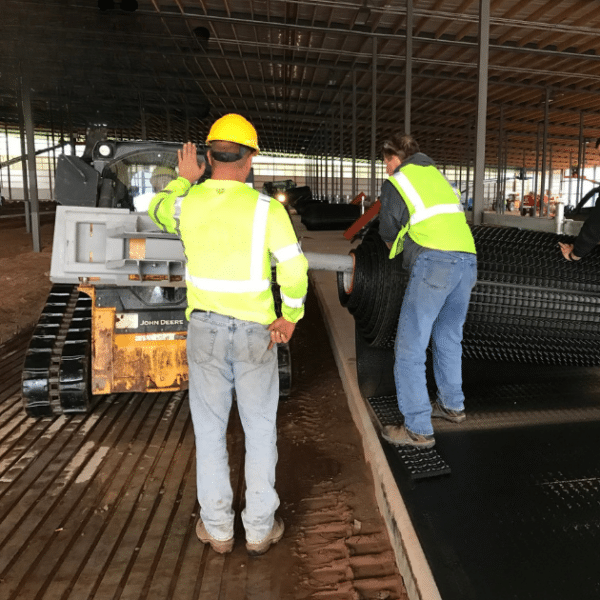
The most practical starting point is often the location where poor footing creates the greatest difficulty for cow movement and daily barn routines.
Holding Pens and Milking Parlor Entrances
Cows frequently stand for extended periods and move in groups in these areas. Worn or wet concrete may contribute to slipping and hesitation, making them strong candidates for a rubber flooring retrofit.
Parlor Return Lanes and Cattle Alleys
These lanes experience repeated hoof traffic and manure removal. A rubber overlay can provide a more consistent walking surface while helping protect the underlying concrete from some direct wear.
Crossovers and Sharp Turns
Changes in direction place additional demands on traction. Rubber flooring can help cows maintain more secure footing as they turn, enter gates, or move between barn sections.
Feed Alleys and Other High-Traffic Areas
Comfortable walking and standing surfaces can support more confident movement around feed bunks, waterers, and other heavily used areas.
For a more detailed look at which areas may benefit most, explore Agromatic's rubber flooring options and the different applications they are designed to serve.
Choosing the Right Rubber Flooring for an Existing Concrete Barn
Rubber flooring products differ in their construction, texture, thickness, installation requirements, and compatibility with manure-removal equipment.
Agromatic offers several options that can be matched to the demands of a specific location.
KRAIBURG KURA: Premium Comfort and Traction for High-Traffic Areas

KRAIBURG KURA rubber flooring is a proven option for producers looking to improve cow traction and walking comfort in frequently traveled areas.
These 1-inch-thick interlocking mats feature a textured, high-grip surface and raised studs underneath for cushioning.
KURA can be used in holding areas, walking alleys, crossovers, and milking parlors. The interlocking edges help maintain a secure, continuous flooring surface.
For older barns with worn but structurally sound concrete, KURA offers a practical way to upgrade traction without a complete floor replacement.
KURA is compatible with appropriate alley scrapers. For tractor or skid-loader cleaning, Agromatic recommends considering flooring designed for that use, such as Cirrus.
KRAIBURG Cirrus: Rubber Flooring for Scraper and Equipment Traffic
KRAIBURG Cirrus interlocking floor mats are an option for dairy operations that need comfortable cow flooring while accommodating regular manure removal.
Cirrus mats are approximately 3/4 inch thick and feature a ribbed underside, traction-focused surface, and interlocking edges.
They are designed for areas cleaned with suitable alley scrapers and skid loaders, making them particularly useful when retrofitting existing cattle alleys.
Cirrus can also be installed over appropriately prepared grooved or roughened concrete.
For producers managing older floors with daily equipment traffic, Cirrus provides a balance of cushioning, traction, and practical cleaning compatibility.
DairyGrip Rubber Floor Belting: Rolled Flooring for Longer Runs
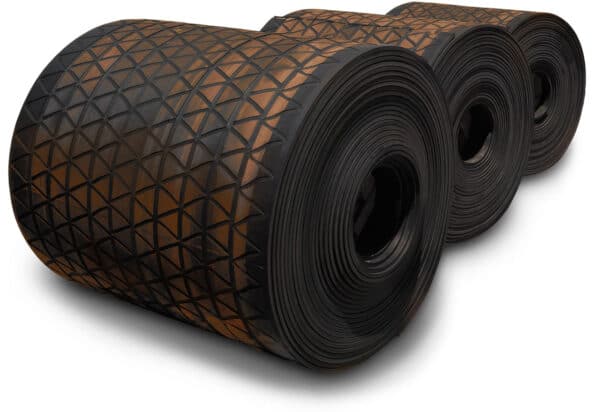
Instead of individual interlocking mats, DairyGrip is supplied in long rolls that can cover extended walking areas with fewer seams.
Its grooved surface is designed to provide traction, while internal steel cable reinforcement contributes to durability in demanding agricultural environments.
DairyGrip is suitable for applications including:
- Dairy barn walkways and alleys.
- Feed alleys.
- Holding areas.
- Parlor return and transfer lanes.
- High-traffic cattle movement areas.
DairyGrip is designed for use with suitable scrapers, tractors, and flush systems. The installation layout, fastening, and cleaning-equipment settings should be reviewed for each facility.
For producers covering longer stretches of worn concrete, rolled rubber flooring can be an appealing option because it reduces the number of joints compared with many individual mat installations.
KRAIBURG MONTA: Additional Grip for Slopes and Inclines
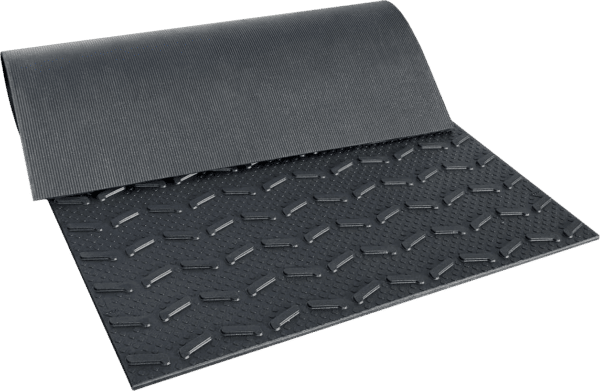
Sloped lanes, ramps, and transitions can become particularly challenging when concrete wears smooth.
KRAIBURG MONTA cattle traction mats are designed for inclined areas. Their raised V-shaped rib profile helps provide grip as cattle travel uphill or downhill.
MONTA can be considered for parlor approaches, inclined cattle lanes, and other locations where additional traction is needed.
Proper orientation, anchoring, and drainage are important when installing rubber on a slope.
KRAIBURG pediKURA: Targeted Hoof-Wear Zones
Rubber flooring can improve cushioning, but hoof wear also deserves consideration when cattle spend much of their time on softer surfaces.
KRAIBURG pediKURA and pediCIRRUS are designed to work alongside the corresponding KURA and Cirrus flooring systems.
These products incorporate abrasive zones that help support natural claw wear as cows move across the surface.
Agromatic recommends using these specialty mats in selected areas, such as crossovers, near waterers, and at parlor entrances and exits.
They are intended to complement standard rubber flooring and routine hoof-care practices rather than replace hoof trimming.
KRAIBURG profiDRAIN: An Option for Wet Walking Alleys

If moisture buildup is a recurring concern, flooring with integrated drainage features may be worth evaluating.
KRAIBURG profiDRAIN rubber flooring features a curved surface that directs liquids toward integrated drainage channels.
It is designed for walking alleys and can be used in certain renovation projects.
However, the system still requires an appropriate concrete base and drainage layout. Scraper blades must also be matched to the flooring's channel profile.
profiDRAIN is an example of why selecting rubber flooring should involve more than choosing a surface based on thickness or appearance alone.
The right product should match the way the barn handles cattle traffic, moisture, and manure removal.
Installation Details That Make or Break a Retrofit
Even premium flooring can create maintenance problems if installation details are overlooked.
Transitions between rubber and concrete require particular attention.
Poorly planned edges can interfere with scraper blades, catch debris, or create uneven walking surfaces.
The same is true around drains, doorways, gates, and other areas where flooring must be cut or fitted.
Before installation, consider the following:
1. Surface preparation
Make sure the existing concrete meets the flooring manufacturer's requirements for stability, cleanliness, and surface condition.
2. Flooring layout
Measure the area carefully and plan how mats or rolls will fit around drains, gates, posts, and other obstructions.
3. Secure edges and transitions
Follow the product-specific recommendations for anchors, fasteners, expansion allowances, and edge placement.
4. Manure-removal equipment
Verify that scraper blades and equipment settings are appropriate for the selected flooring.
5. Drainage
Maintain existing drainage pathways and correct problem areas before installing rubber.
For technical instructions, Agromatic provides KRAIBURG flooring installation guides and scraper resources.
Taking the time to plan these details can help protect the flooring investment and reduce future maintenance frustrations.
How Does Retrofitting Rubber Flooring Pay Off?
A flooring retrofit should be evaluated as a long-term facility investment rather than simply a new surface covering.
The potential return comes from several areas of barn performance.
Better Cow Movement and Footing
When cows feel secure on the surface beneath them, they may move more confidently through daily routines.
This can be especially valuable in holding pens, return lanes, and crossovers where consistent cow flow supports the milking schedule.
Support for Hoof Health and Mobility
Improved traction and cushioning can help support comfortable movement and reduce slipping.
However, flooring is only one part of hoof health. Routine hoof trimming, hygiene, nutrition, stall comfort, and herd management remain essential.
Protecting Existing Concrete
Covering sound concrete with rubber can reduce some direct abrasion from hoof traffic and normal barn activity.
That may help producers get additional practical use from existing flooring, although rubber cannot prevent structural deterioration or correct unresolved drainage problems.
Phased Spending and Facility Upgrades
A targeted retrofit allows producers to address their most pressing flooring problems first.
Rather than committing to a complete barn renovation, they can evaluate performance in one area before expanding into others.
A More Practical Way to Evaluate Return on Investment
Before installation, document current conditions:
- Locations where cows regularly slip or hesitate.
- Cow movement through critical lanes.
- Hoof-health and mobility observations.
- Existing concrete damage and repair needs.
- Cleaning time and maintenance concerns.
After installation, evaluate the same areas over a consistent period.
Actual financial returns depend on flooring cost, installation, the condition of the existing facility, maintenance requirements, and measurable operational changes.
There is no universal payback period for every dairy barn, but tracking the results helps producers make informed decisions about future upgrades.
Keeping Your New Rubber Flooring Performing
Rubber flooring should be included in the barn's regular cleaning and maintenance program.
Manure, feed residue, and standing moisture can reduce traction even on a textured surface.
Daily cleaning should focus on removing buildup and keeping drainage paths open.
Routine inspections should check for:
- Loose or damaged edges.
- Shifting or raised flooring.
- Worn areas and damaged seams.
- Standing water and blocked drainage.
- Scraper contact or equipment-related wear.
Follow the manufacturer's recommendations for cleaning products, equipment compatibility, and periodic maintenance.
The goal is to maintain a surface that provides dependable traction and remains compatible with the barn's daily routines.
Frequently Asked Questions About Rubber Flooring Retrofits
Q: Can rubber flooring be installed directly over old concrete?
A: Yes, many dairy barn rubber flooring products are designed to be installed over existing concrete. The concrete must meet the specific product's installation requirements. Major structural defects, unstable areas, and drainage problems should be corrected before installation.
Q: Can existing alley scrapers work with rubber flooring?
A: Many rubber flooring systems are compatible with manure scrapers, including KRAIBURG KURA, Cirrus, and DairyGrip. However, compatibility depends on the flooring product, scraper design, blade settings, and installation details. Always confirm equipment requirements before selecting flooring.
Q: Are rolled rubber flooring and interlocking rubber mats interchangeable?
A: Not necessarily. Rolled rubber belting such as DairyGrip can be useful for covering long runs with fewer seams. Interlocking mats such as KRAIBURG KURA and Cirrus provide other installation and application advantages. The best choice depends on cow traffic, cleaning equipment, existing floor conditions, and layout.
Q: Do I need to replace damaged concrete before installing rubber?
A: It depends on the damage. Cosmetic surface wear or worn grooves may be suitable for a rubber retrofit after proper preparation. Significant cracking, crumbling, settlement, or structural instability should be evaluated and repaired first.
The Bottom Line: Upgrade the Floor, Improve Cow Comfort
Aging concrete doesn't always mean it's time for a complete barn remodel.
For dairy producers dealing with worn grooves, slippery traffic lanes, and uncomfortable walking surfaces, rubber flooring can provide a practical alternative to replacing large sections of concrete.
The best results come from starting with a sound foundation, selecting flooring for the application, and paying attention to the details that affect installation and maintenance.
Whether your operation needs KRAIBURG interlocking mats, DairyGrip rolled rubber flooring, or specialty products for slopes and drainage, Agromatic Inc. can help you evaluate the options.
Planning a flooring upgrade?
Explore Agromatic's complete KRAIBURG rubber product lineup, review DairyGrip Rubber Floor Belting, or talk with our team about the flooring challenges in your existing barn.
If you’re considering rubber flooring for your dairy barn, the Agromatic team can help you explore options for your space. When you contact us, it can be helpful to have approximate dimensions, photos of the existing floor, details about your cleaning equipment, and any drainage concerns in mind.
Request a Rubber Flooring Quote
Call (800) 800-5824 to discuss your project.