Positive Pressure Fans
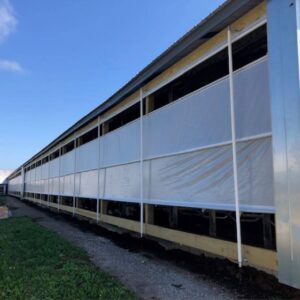
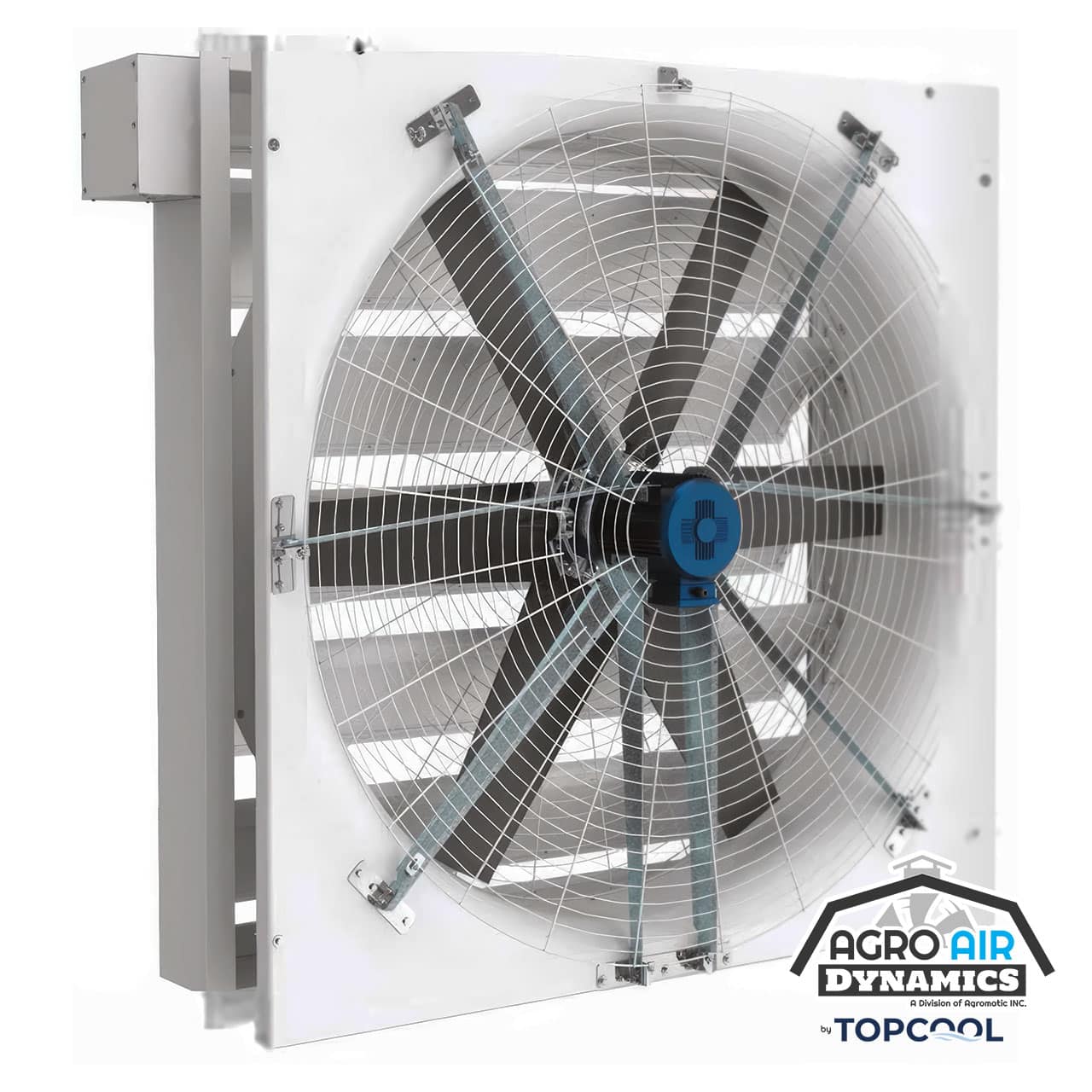
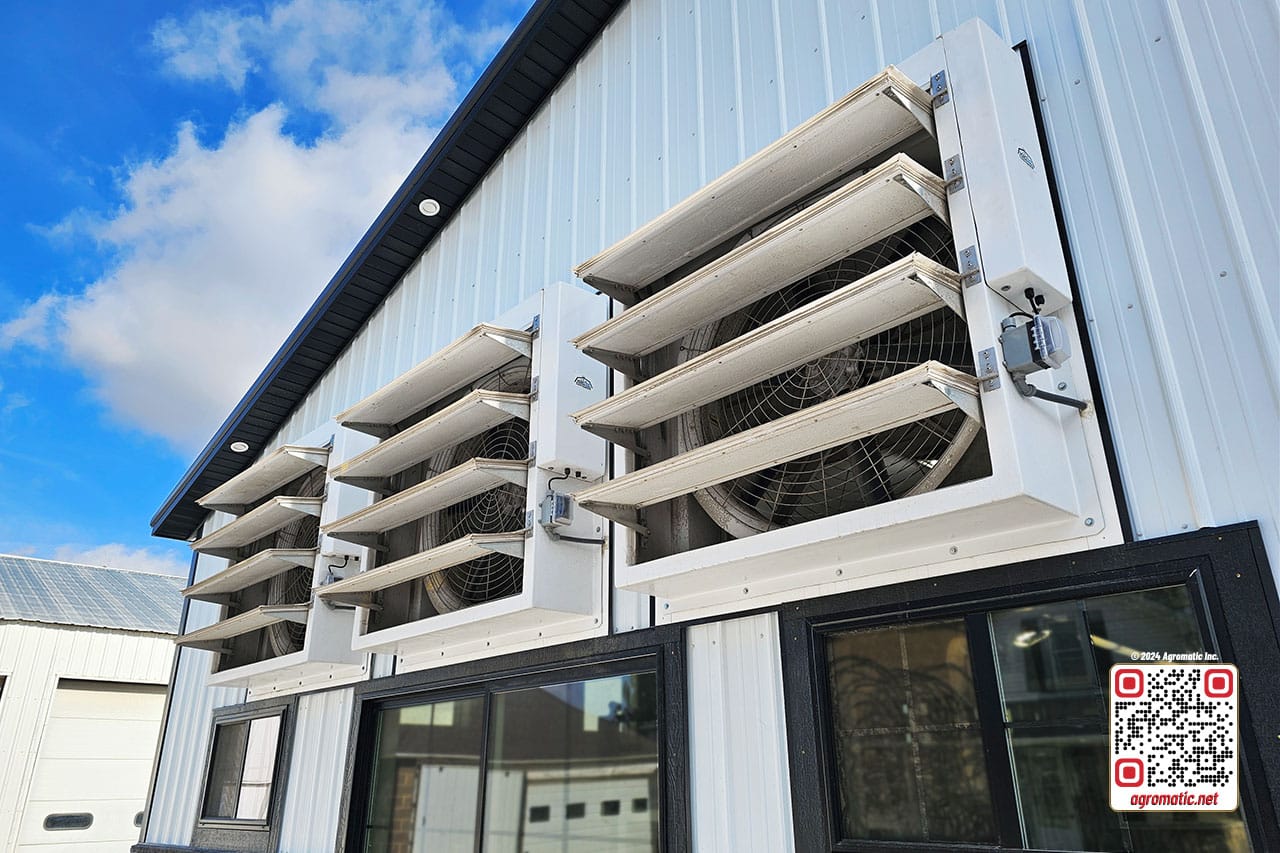
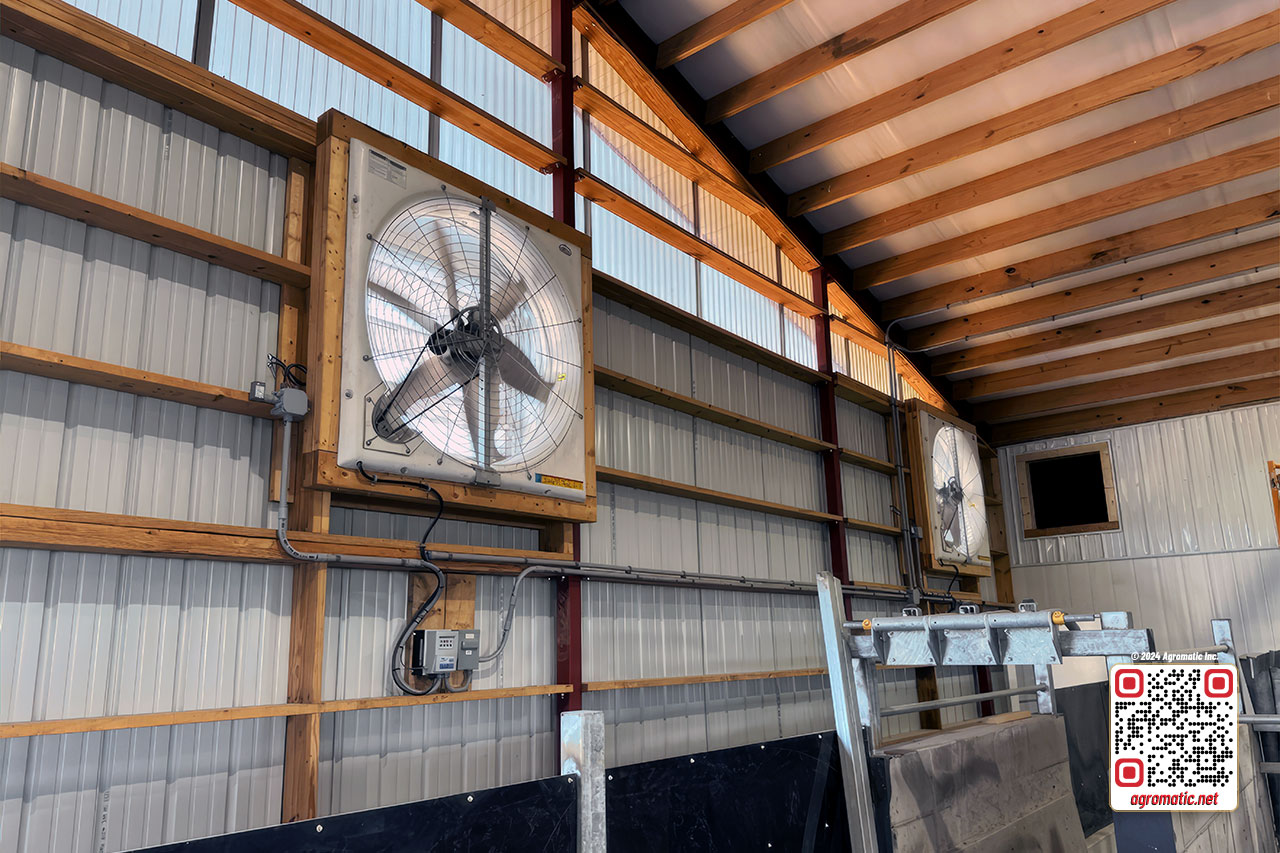
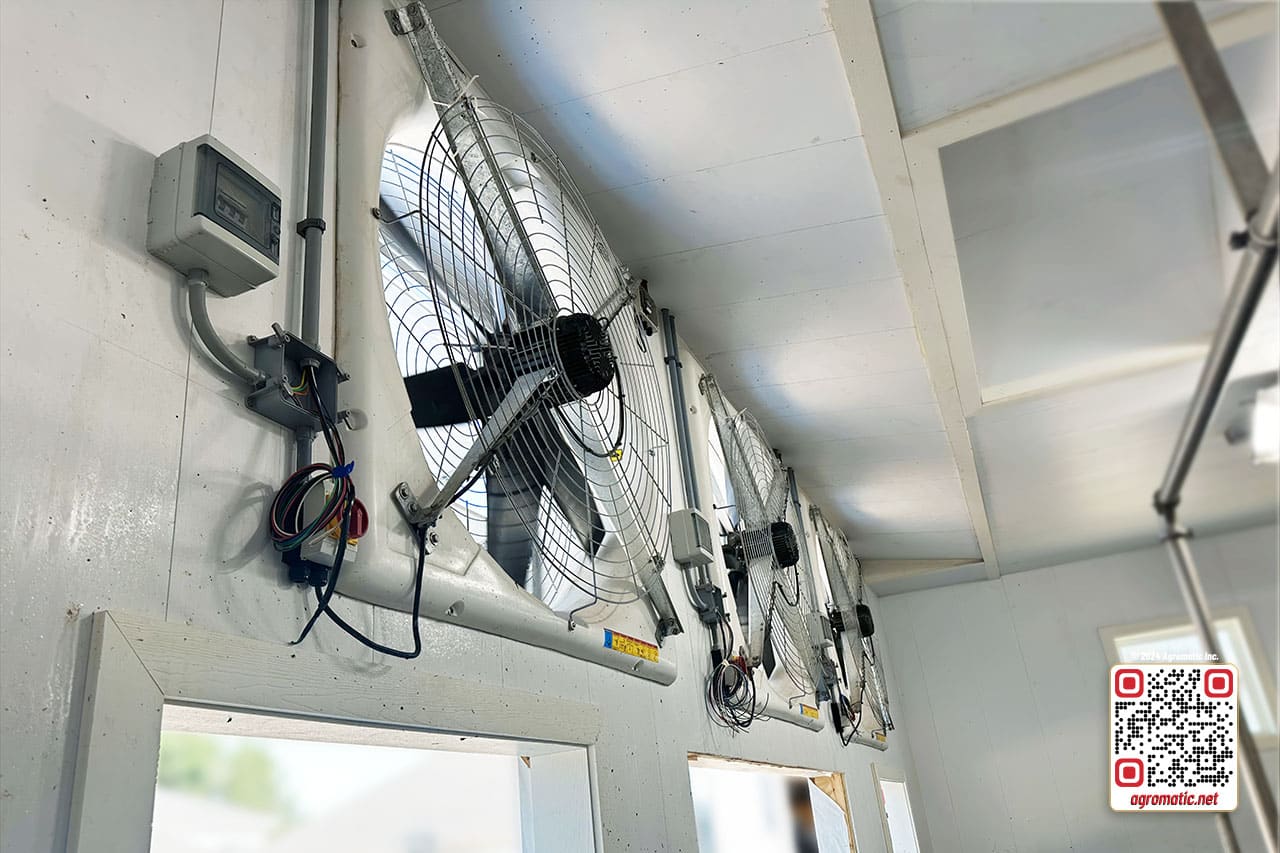
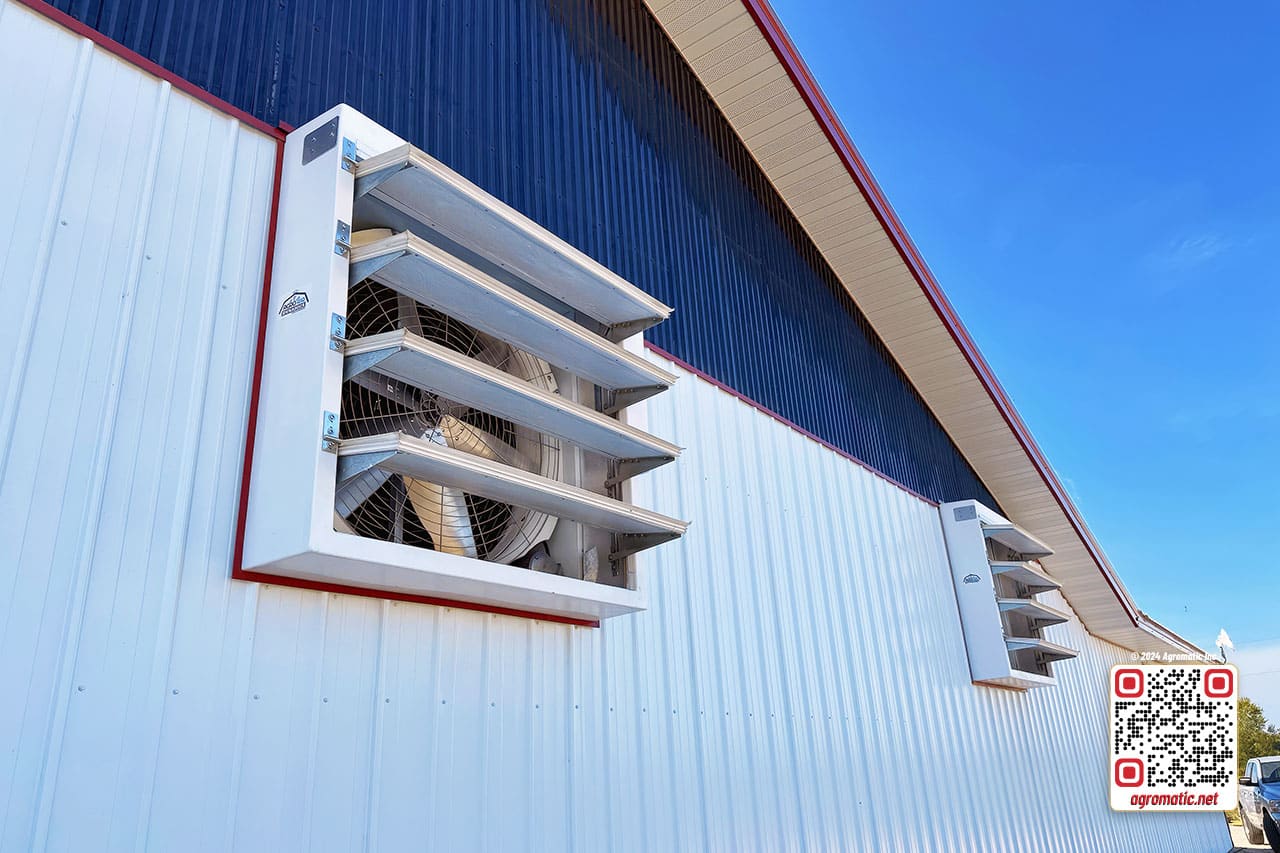
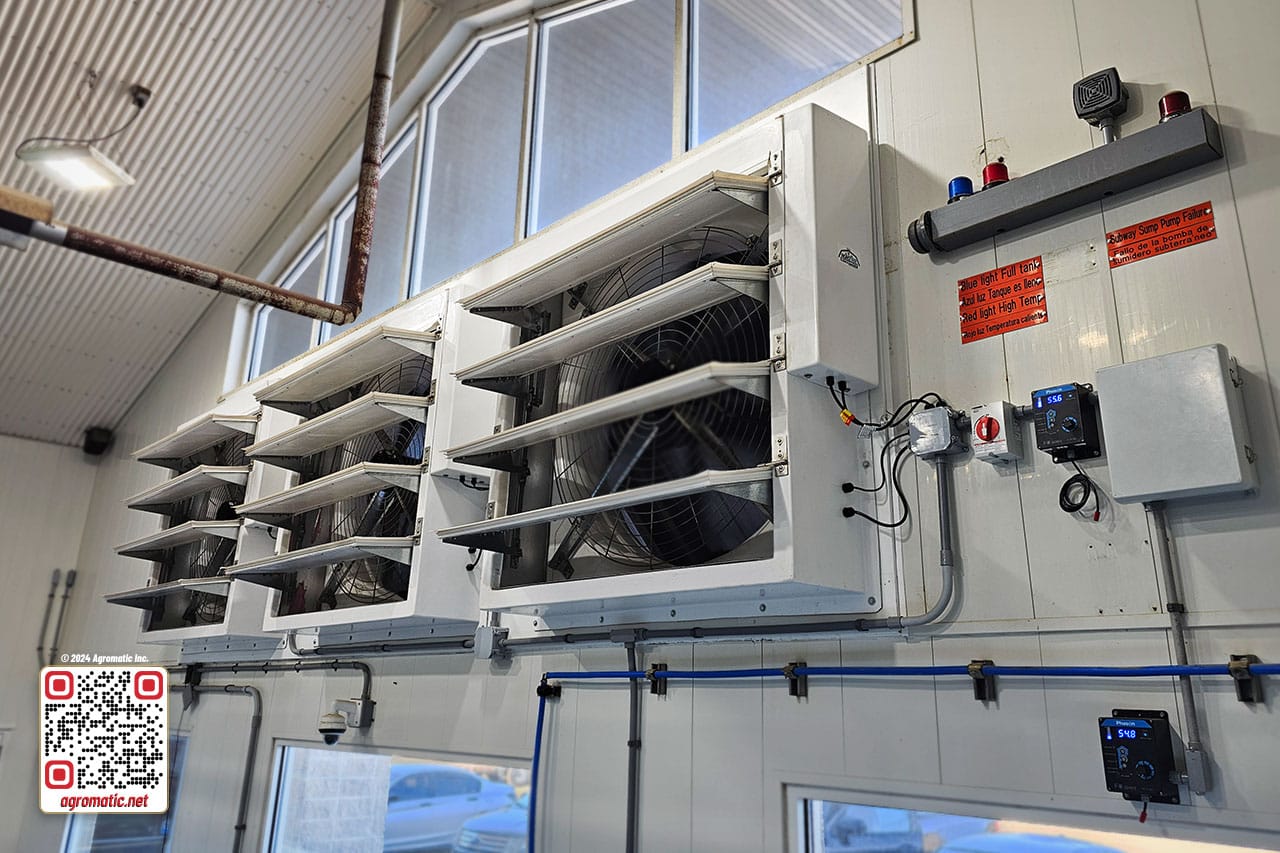
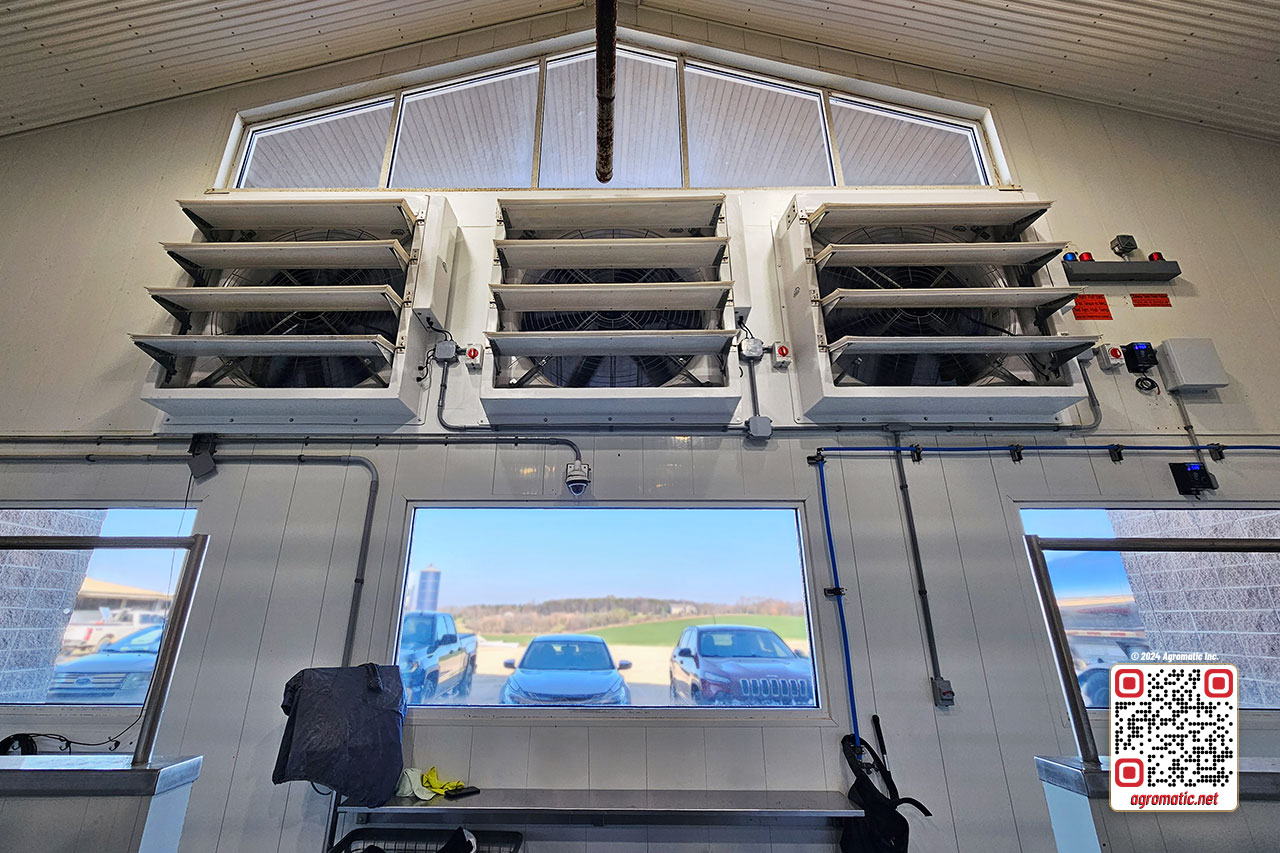
Agromatic’s Positive Pressure Fans are designed to inject fresh air into dairy barns, ensuring proper air exchange and humidity control. Ideal for long tunnel-ventilated barns and milking parlors, these fans are built with durable fiberglass composite housing, mechanized insulated shutters, and offer energy-saving variable speed options. Available in both 50″ and 72″ models, these fans come with a robust warranty and are crafted for maximum efficiency and minimal maintenance.
Key Benefits of Positive Pressure Fans
- Improves Airflow: Ensures optimal air circulation for healthier livestock environments.
- Prevents Contaminants: Keeps out dust, allergens, and pests by maintaining positive pressure.
- Energy Efficient: Delivers high performance while keeping energy costs low.
- Boosts Ventilation: Enhances barn ventilation to reduce heat stress and improve animal comfort.
- Easy Installation: Designed for quick setup and integration into existing systems.
Documentation

Description
Positive Pressure Fans for Dairy Barn Ventilation

Agromatic is proud to offer Positive Pressure Fans, designed to inject fresh air into your dairy barns, improving air quality and reducing humidity. These positive pressure ventilation fans are ideal for use in milking parlors and tunnel-ventilated barns, helping to enhance air exchange and alleviate pressure on exhaust systems.
Key Features:
- High Airflow Capacity (CFM):
- 50″ Fan: Delivers 18,500 CFM at 0.1″ W.g.
- 72″ Fan: Delivers 40,950 CFM at 0.1″ W.g.
- Durable Construction:
- Housing: Made from a UV-resistant and corrosion-free fiberglass composite for long-lasting use.
- Blades: Available in formed aluminum for Belt Drive fans or nylon for Direct Drive fans.
- Shutters: Mechanized insulated shutters provide a tight seal and can be controlled separately to act as air inlets.
- Energy-Efficient Operation:
- Available in Belt Drive and Direct Drive versions.
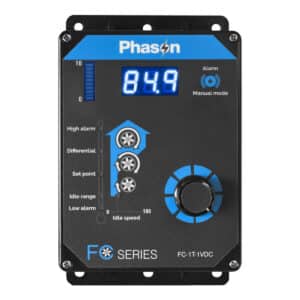
- Optional variable speed controls for energy-efficient operation.
- Winter Accessories: Options for accessories to optimize winter operation.
Warranty & Certifications:
- 3-Year Warranty on the entire fan.
- 5-Year Warranty on nylon blades.
- 10-Year Warranty on the housing.
- Motors are cULus or CE certified, and all fans come with stainless steel hardware for extra durability.
- Fans tested according to AMCA standards for performance and reliability.
Investing in Agromatic’s Positive Pressure Box Fans ensures proper ventilation, enhanced air quality, and reduced humidity, creating a healthier environment for your herd.
Frequently Asked Questions Regarding Positive Pressure Fans
Q: Can a fan create positive pressure?
A: Yes, a fan can create positive pressure. In a ventilation system, positive pressure occurs when a fan forces more air into a space than can naturally escape, resulting in higher air pressure inside the space compared to the outside. Positive pressure fans are commonly used in environments like barns or livestock facilities to improve air quality, reduce contaminants, and regulate temperature by pushing fresh air in while preventing dust, pathogens, or pollutants from entering. This type of ventilation helps create a healthier environment for livestock.
Q: What does a positive pressure fan do?
A: A positive pressure fan works by pushing fresh air into a space, increasing the internal air pressure and forcing out stale or contaminated air. This creates a cleaner and healthier environment by preventing outside pollutants, dust, or pathogens from entering. Positive pressure fans are commonly used in barns, livestock facilities, and industrial settings to improve air quality, control temperature, and enhance overall ventilation, ensuring a steady flow of fresh air while keeping harmful particles out.
Q: What is a disadvantage of a positive pressure fan?
A: One potential disadvantage of a positive pressure fan is that it can sometimes require more energy to maintain the desired airflow and pressure levels, especially in larger facilities. However this increased energy usage is an investment in the health and productivity of your livestock. By ensuring constant fresh air circulation and keeping harmful contaminants out, the fan helps create a healthier environment that promotes better animal welfare, reducing costly health issues and improving overall farm efficiency in the long run.
Q: What is the difference between positive and negative pressure fans?
A: Positive pressure fans push fresh air into a space, creating a higher pressure inside compared to the outside. This helps force stale air out and prevents contaminants from entering, ideal for maintaining a clean, controlled environment. Negative pressure fans, on the other hand, pull air out of a space, creating lower pressure inside. This draws fresh air in through vents or other openings, which can be useful for removing heat, moisture, or odors.
In summary, positive pressure fans ensure a steady inflow of clean air, while negative pressure fans excel at removing unwanted air and promoting ventilation. Each type is suited for different environmental control needs.
Ventiladores Tonair
Ventiladores de Presión Positiva para establos lecheros
Los ventiladores de presión positiva están diseñados para inyectar aire fresco en establos y edificios agrícolas, mejorando la calidad del aire y ayudando a reducir la humedad. Son ideales para salas de ordeño y para instalaciones con ventilación tipo túnel, donde aportan aire de reposición y ayudan a disminuir la carga de trabajo de los ventiladores de extracción, logrando un intercambio de aire más consistente.
Estas unidades están construidas con carcasa de compuesto de fibra de vidrio resistente a los rayos UV y a la corrosión, e incorporan persianas/compuertas aisladas mecanizadas para un sellado firme y control eficiente del ingreso de aire. También pueden incluir controles de velocidad para optimizar consumo eléctrico.
Opciones
- Disponible en transmisión por banda (Belt Drive) y accionamiento directo (Direct Drive)
- Control de velocidad opcional para eficiencia energética y ajuste del flujo según temporada
- Opciones de persianas/compuertas (shutters) y accesorios de invierno para optimizar la operación en clima frío
Beneficios clave
- Mejora la circulación de aire y el intercambio de aire en salas de ordeño y establos
- Ayuda a mantener contaminantes afuera (polvo, alérgenos) gracias a la presión positiva
- Apoya la reducción de estrés por calor y mejora el confort animal
- Diseñado para instalación sencilla e integración en sistemas existentes
Rendimiento máximo
- 50": ≈31,400 m³/h a 25 Pa | 18,500 CFM a 0.1" W.g.
- 72": ≈69,600 m³/h a 25 Pa | 40,950 CFM a 0.1" W.g.
Preguntas frecuentes:
Q: ¿Qué hace un ventilador de presión positiva?
A: Un ventilador de presión positiva funciona impulsando aire fresco hacia el interior de un espacio, aumentando la presión interna y expulsando el aire viciado o contaminado. Esto crea un entorno más limpio y saludable al evitar que ingresen contaminantes externos, polvo o patógenos. Los ventiladores de presión positiva se usan comúnmente en establos, instalaciones ganaderas y entornos industriales para mejorar la calidad del aire, controlar la temperatura y optimizar la ventilación, asegurando un flujo constante de aire fresco mientras se mantienen fuera partículas dañinas.
Q: ¿Cuál es una desventaja de un ventilador de presión positiva?
A: Una posible desventaja de un ventilador de presión positiva es que, en algunos casos, puede requerir más energía para mantener el flujo de aire y los niveles de presión deseados, especialmente en instalaciones grandes. Sin embargo, este mayor consumo de energía es una inversión en la salud y la productividad de su ganado. Al garantizar una circulación constante de aire fresco y mantener fuera contaminantes perjudiciales, el ventilador ayuda a crear un ambiente más saludable que promueve el bienestar animal, reduce problemas de salud costosos y mejora la eficiencia general de la granja a largo plazo.
Q: ¿Cuál es la diferencia entre ventiladores de presión positiva y de presión negativa?
A: Los ventiladores de presión positiva empujan aire fresco hacia el interior de un espacio, creando una presión más alta dentro que fuera. Esto ayuda a expulsar el aire viciado y evita que ingresen contaminantes, por lo que es ideal para mantener un ambiente limpio y controlado. Los ventiladores de presión negativa, en cambio, extraen el aire de un espacio, creando una presión más baja en el interior. Esto hace que el aire fresco entre por rejillas, entradas o aberturas, lo cual puede ser útil para eliminar calor, humedad u olores.